

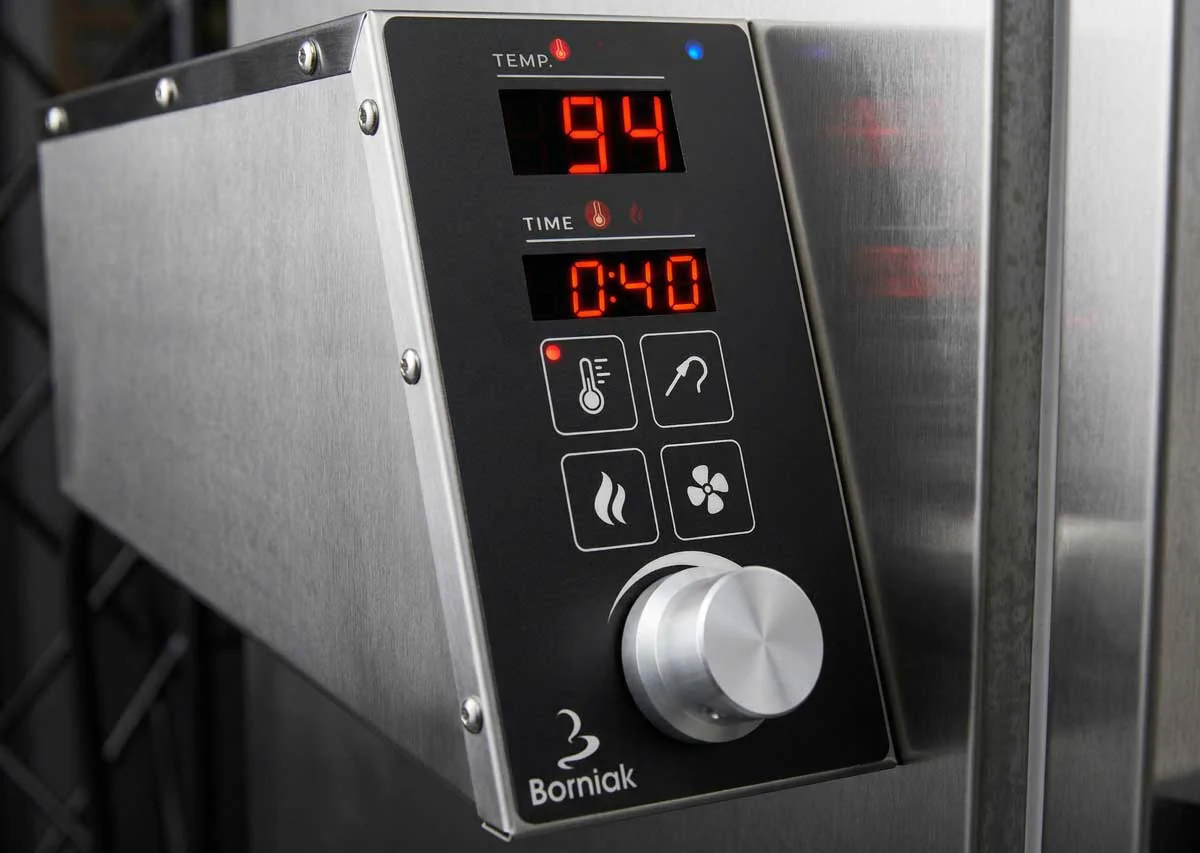
Smoking time and temperature depend on the product, its thickness, fat content and the method you choose. Trout is handled differently from pork belly, and a thick pork neck needs a different approach from sausages. Treat time as a guide, and for hot smoking focus on the internal temperature of the food.
Smoking time and temperature chart
The table below gives practical ranges for common products. These values are a guide for home smoking. Always take into account the size of the piece, curing or salting, surface drying and the instructions for your smoker.
| Product | Chamber temperature | Finishing stage | Internal temperature | Time in the smoker |
|---|---|---|---|---|
| Pork loin | 50-55°C | 80-90°C | 63-64°C | 4-6 hours |
| Pork belly / bacon | 50-60°C | 80-90°C | 65-68°C | 4-6 hours |
| Pork neck / collar | 55-60°C | 85-90°C | 68-72°C | 5-7 hours |
| Trout | 60-75°C | 85-90°C if finishing is needed | about 63°C | 1.5-2.5 hours |
| Cold-smoked salmon | 16-22°C | no heat cooking stage | not applicable; the process requires properly prepared fish | about 18 hours in stages |
| Sausages | 50-60°C | 85-90°C or poaching according to the recipe | 68-72°C | 3-5 hours |
The time shown means the approximate time in the smoker: smoke time plus any hot finishing or time needed to reach the target internal temperature. It does not include curing, drying before smoking, cooling or storage.
Why time alone is not enough
Two pieces of pork loin can look similar and still heat at different speeds. Thickness, starting temperature, fat content, surface moisture, the amount of food in the chamber and the stability of the smoker all affect the final result.
A better way to control the process is to watch three things: chamber temperature, smoke quality and the internal temperature of the food. Together, they give a more repeatable result than time alone.
How to smoke pork loin
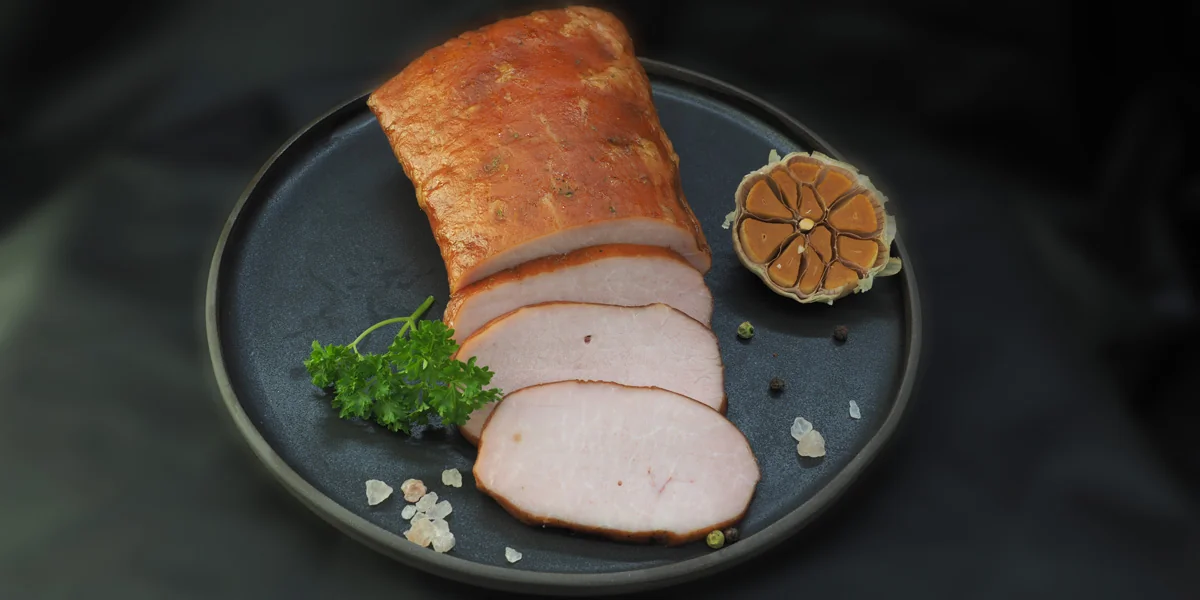
Pork loin is lean, so it can dry out easily. Keep the process steady, dry the surface well and check the centre with a probe. Raising the heat too quickly can make the meat lose moisture before the centre has reached the right level of cooking.
How to smoke pork belly or bacon
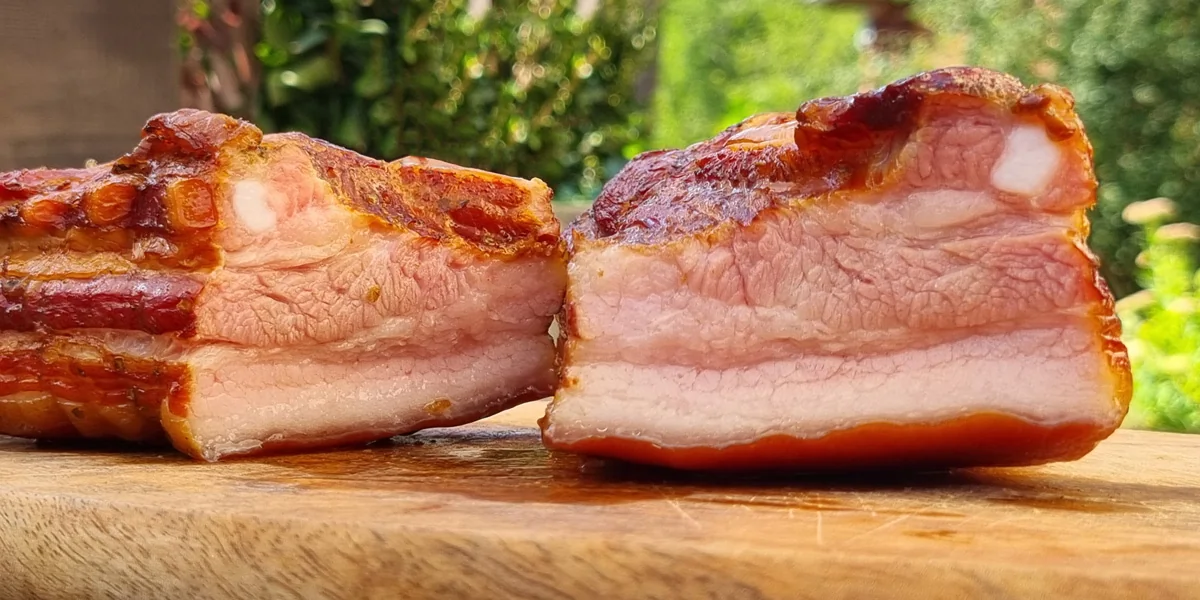
Pork belly takes smoke well and develops an appetising colour. The main risk is too much heat, which can melt out too much fat. Drying the surface before smoking helps the smoke settle evenly and gives a cleaner flavour.
How to smoke pork neck
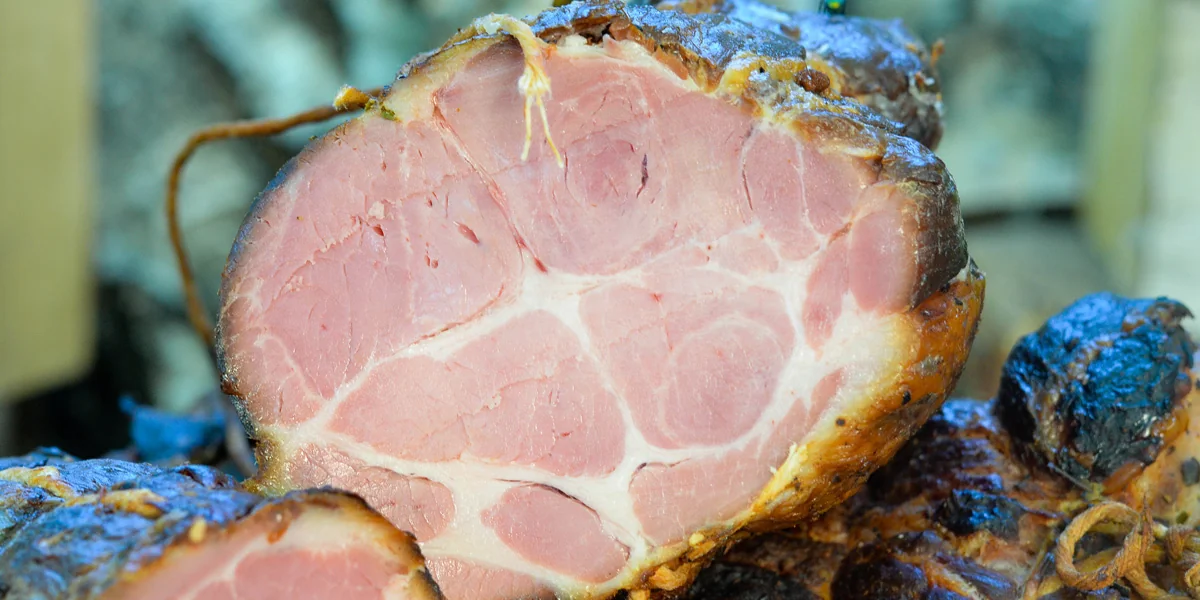
Pork neck, also called collar, is thicker and fattier than loin. It needs time to come up to temperature gently. A stable smoker and a probe thermometer give better results than trying to rush the process with high heat.
How to smoke trout
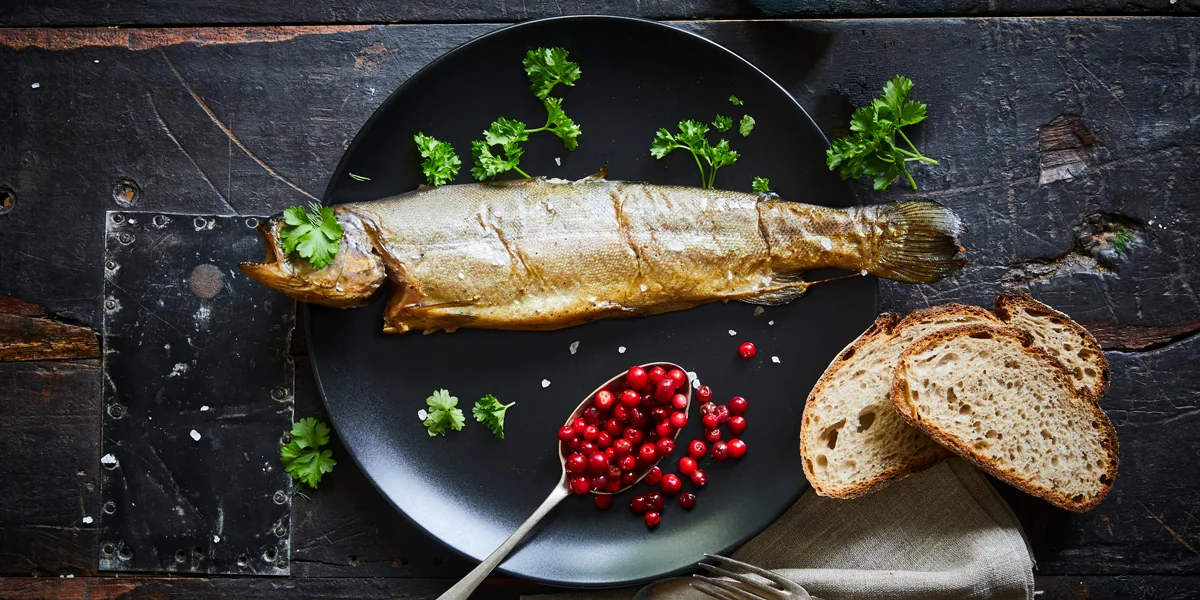
Trout is delicate and heats faster than large cuts of pork. The key is to dry the skin first, use gentle clean smoke and monitor the centre of the fish. If the process runs too long, the flesh can become dry and break apart instead of flaking neatly from the bones.
How to cold smoke salmon
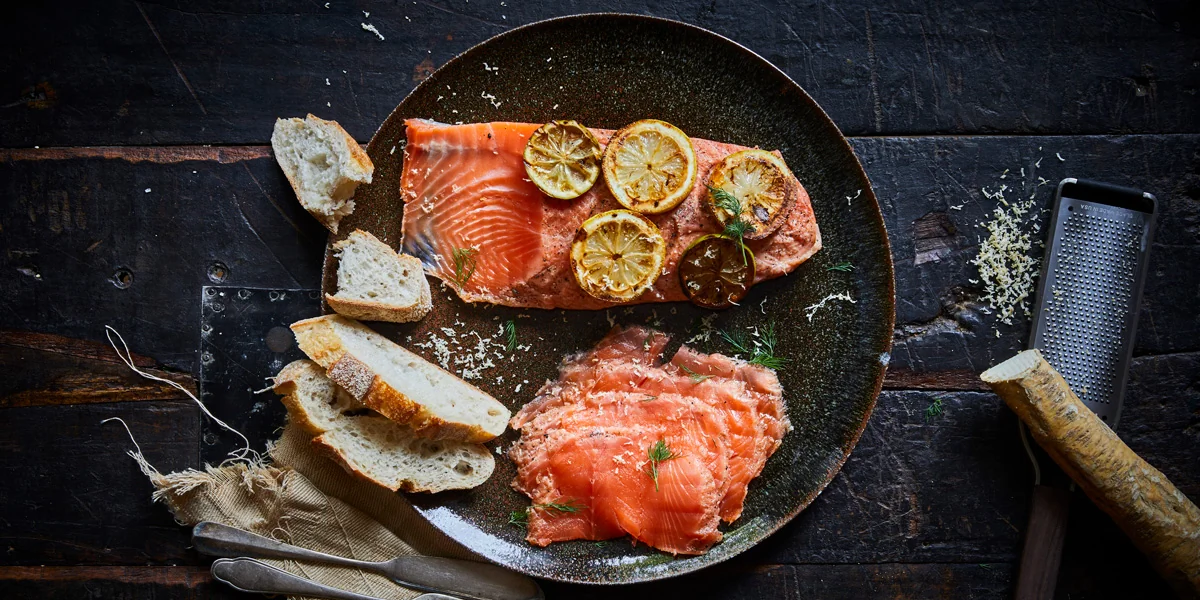
Cold-smoked salmon is not cooked with heat. The process relies on properly prepared fish, salt, hygiene, low temperature and time. Stable conditions and clean, delicate smoke are essential, especially on warmer days when the chamber temperature can rise more easily.
How to smoke sausages
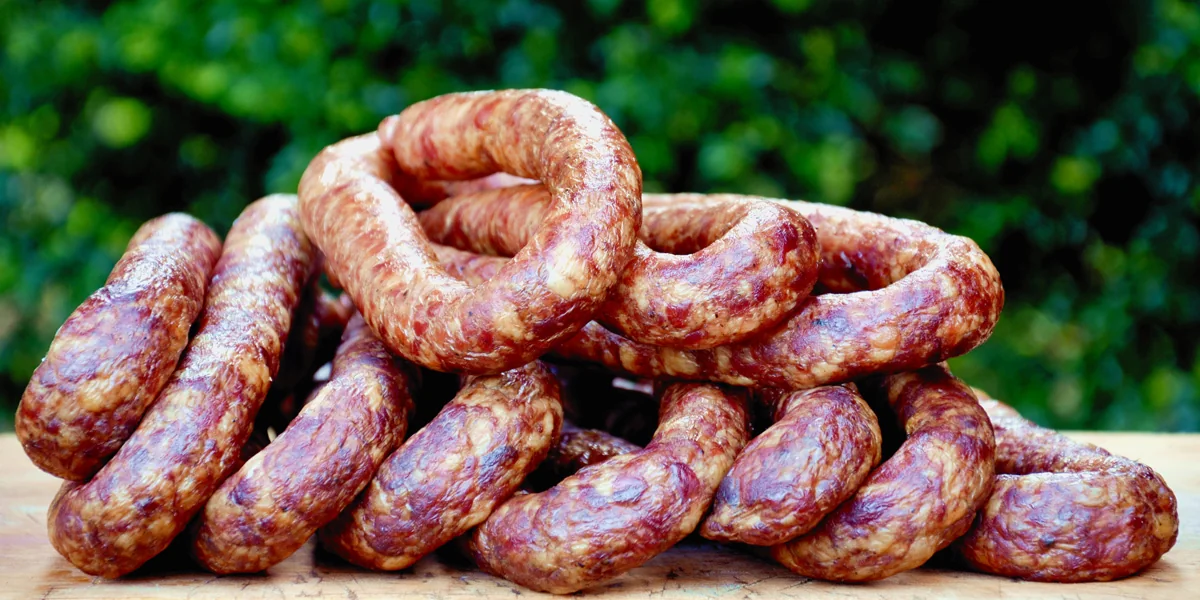
Sausages should be evenly dried before the smoke is applied. A wet casing takes smoke less evenly, which can lead to patchy colour and a less clean flavour. After smoking, the centre of the sausage must be brought to the correct temperature or finished according to the recipe.
Common mistakes when setting the temperature
Raising the heat too quickly
The food may look ready on the outside while the centre is still not at the right temperature.
Skipping the drying stage
A wet surface makes it harder for smoke to settle and can affect the colour of the finished product.
Using too much smoke
More smoke does not always mean better flavour. Heavy smoke can make food taste bitter.
Not using a probe thermometer
Without internal temperature control, it is easy to overcook the food or stop the process too early.
How to plan the process step by step
- Choose the product and check its approximate temperature range in the table.
- Prepare the food according to the recipe: curing, salting, seasoning or marinating.
- Dry the surface before you start applying smoke.
- Preheat the smoker to the right chamber temperature for the product.
- Start the smoke only when the surface is dry.
- Keep the chamber temperature stable and avoid sudden heat changes.
- At the end, check the internal temperature with a probe thermometer.
- Cool the product properly and store it hygienically.
How an electric smoker helps
A Borniak electric smoker is useful when stable temperature, consistent smoke and repeatability matter. You do not have to manage a live fire, and separate control of temperature and smoke makes it easier to adapt the process to pork loin, pork belly, sausages, fish or cheese.
The automatic smoke generator reduces the need to keep adding wood chips. Smart models can make monitoring and saving settings easier, but product preparation, hygiene and internal temperature control still remain essential.
FAQ
Does smoking time depend on the size of the cut?
Yes. A thicker piece heats more slowly, even when the chamber temperature is the same. Treat the table as a guide and check readiness with a probe thermometer.
What matters more: time or internal temperature?
Internal temperature matters more in practice. Time helps you plan the process, but the temperature in the centre tells you whether the food has reached the right level of cooking.
Can I smoke without a finishing stage?
It depends on the product and the recipe. Smoke adds flavour, aroma and colour, but it does not always bring the centre to the required temperature. Some products need hot finishing, poaching or another final stage.
When should I turn on the smoke?
Turn on the smoke when the surface of the food is dry. A wet surface takes smoke less evenly and can give a weaker colour and a less clean flavour.
Can I speed up smoking with a higher temperature?
Not always. Too much heat can dry lean meat, melt too much fat from pork belly or damage the texture of fish. A stable process usually gives a better result.
What is the difference between cold smoking and hot smoking?
Cold smoking uses low temperature and is not a heat-cooking method. Hot smoking combines smoke with a rise in product temperature.
Does colour mean the product is ready?
No. Colour mainly shows how smoke has affected the surface. The outside can look good while the centre still has not reached the right temperature.
Summary
Good smoking is based on control, not guesswork. Choose the right chamber temperature for the product, dry the surface, use clean wood chips and check the internal temperature. This makes pork loin, pork belly, pork neck, fish and sausages easier to repeat, safer to finish and more predictable every time you smoke.