

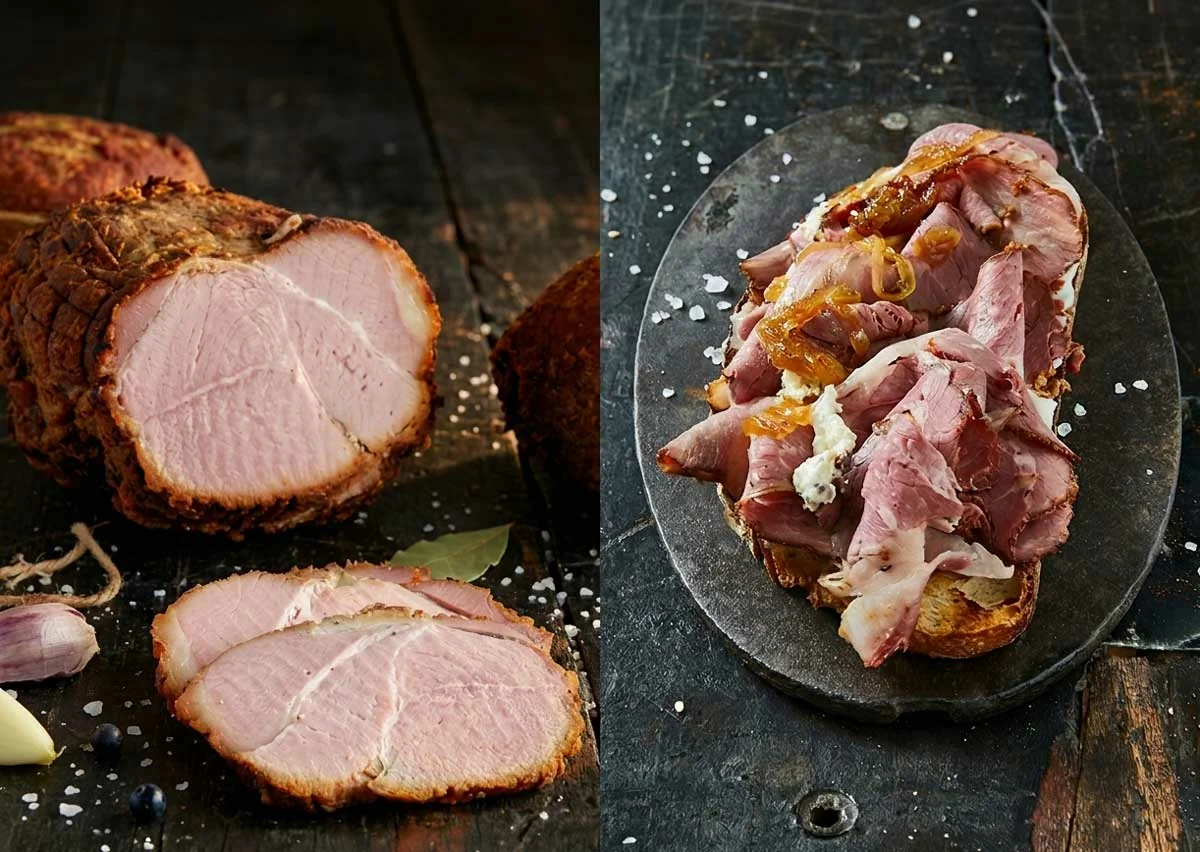
After smoking, products such as sausages, bacon, pork belly, ham, salmon or poultry may still need a final heat treatment. The aim is to bring the centre of the food to the right internal temperature while keeping the texture you want. In practice, two methods are common: poaching in water or steam, and finishing in hot, dry air.
Quick answer
Which method should you choose?
Choose poaching when you want a juicy, gentle result, especially with sausages, ham-style joints and delicate poultry products. Choose finishing when you want a firmer bite, a drier surface and a lightly roasted effect, especially with pork belly, ribs, loin or larger barbecue-style cuts.
Key points
- Poaching uses water or steam, usually around 75–85°C.
- Finishing uses hot, dry air, often around 80–120°C in the chamber.
- Poaching protects juiciness and gives a softer texture.
- Finishing dries the surface slightly and gives a firmer structure.
- Food safety depends on internal temperature, not on smoking time alone.
- Use a food probe in the thickest part of the product, away from bone.
What is poaching after smoking?
Poaching means heating the smoked product in water or steam. Because water transfers heat efficiently, the process is steady and gentle. This helps the product warm through evenly without excessive drying.
Poaching is useful for smoked sausages, ham-style cuts, bacon joints and poultry products where a moist, tender bite is the goal. It does not brown the surface. Its job is to finish the heat treatment and stabilise the texture.
What is finishing in hot air?
Finishing means continuing the process in hot, dry air until the centre reaches the target internal temperature. The surface loses some moisture, so the finished product becomes firmer and more defined.
This method suits pork belly, ribs, loin, brisket-style projects and larger garden-smoking cuts. It is especially useful when you want the smoked flavour to remain on the outside and prefer a texture closer to roasting than to poached ham.
Poaching vs finishing — comparison
| Feature | Poaching | Finishing |
|---|---|---|
| Heating medium | Water or steam | Hot, dry air |
| Typical temperature | About 75–85°C | About 80–120°C chamber temperature |
| Texture | Soft, juicy, even | Firmer, more defined |
| Surface | No browning | Slightly dried or lightly roasted |
| Best for | Sausages, ham, delicate poultry products | Pork belly, ribs, loin, larger BBQ-style cuts |
How to decide in a home smoking project
In the UK, many home-smoking projects sit between traditional curing and garden BBQ. That is why the final stage should match the product. A smoked sausage needs a different finish from pork belly or ribs.
- For juicy smoked sausages, use poaching.
- For ham-style joints, use poaching if tenderness is the priority.
- For pork belly or bacon-style projects, finishing can give a firmer bite.
- For ribs and barbecue-style cuts, finishing helps build a drier outside layer.
- For poultry, always check internal temperature carefully with a probe.
Temperature control for the same products
A useful article should not compare methods using one set of products and then switch to a different safety-temperature table. The table below stays with the same examples used in this guide: sausages, ham-style joints, poultry charcuterie, pork belly, loin, ribs and larger BBQ-style cuts.
There is no single universal internal temperature for every sausage, ham-style product or pork belly project. The target depends on the recipe, meat type, product diameter, curing method and local food-safety guidance. The practical rule is simple: finish the process only after checking the centre with a probe.
| Product group from this article | Usual method | What to control? | Important note |
|---|---|---|---|
| Sausages | Poaching | Water or steam temperature and the internal temperature of the sausage. | Do not judge doneness by casing colour or time alone. |
| Ham-style joints | Poaching | Poaching temperature and the centre of the thickest part. | A large joint heats more slowly than a thin sausage, so probing matters. |
| Poultry charcuterie | Usually poaching or gentle finishing | Internal temperature in the thickest part. | Poultry needs especially careful temperature control. |
| Pork belly, loin and ribs | Finishing | Chamber temperature and the internal temperature of the meat. | Finishing gives a firmer texture, but too long a stage can dry the product. |
| Larger BBQ-style cuts | Finishing | The thickest part of the cut, away from bone and large fat pockets. | The larger the cut, the less reliable time alone becomes. |
Where an electric smoker helps
An electric smoker is useful when you want reliable temperature control without constantly managing a fire. In a Borniak smoker, smoke generation and chamber temperature are easier to control separately, which helps beginners repeat the same process with less guesswork.
In Wi-Fi models with the Borcook app, the user can set the chamber temperature, stage time and target internal temperature. That makes hot-air finishing easier to monitor, but the smoker does not replace correct curing, hygiene or probe checks.
Common mistakes
- Finishing smoked meat by time only, without checking the centre.
- Poaching too hot, which can damage texture.
- Finishing too long, which can dry the product.
- Skipping the drying stage before smoking.
- Using too much smoke and creating bitterness instead of flavour.
FAQ
Is poaching the same as finishing?
No. Both can bring the product up to temperature, but poaching uses water or steam, while finishing uses hot, dry air. The texture and surface will be different.
Should I poach smoked sausages?
Poaching is often a good choice for smoked sausages because it helps keep them juicy and evenly heated without drying the casing too much.
When is hot-air finishing better?
Hot-air finishing is better when you want a firmer product with a slightly drier surface, such as pork belly, ribs, loin or larger BBQ-style cuts.
Can I finish meat inside an electric smoker?
Yes, if your smoker model and manual allow the required temperature range. Stable chamber temperature is one of the main advantages of an electric smoker.
Is smoking time enough to know the food is safe?
No. Smoking time is only a guide. Use a food thermometer to check the internal temperature in the thickest part of the product.
Summary
Poaching is best when juiciness and tenderness matter most. Finishing is better when you want a firmer bite, a drier surface and a result closer to roasting or BBQ. In both cases, the key is stable temperature control and a reliable internal-temperature check.